

Preethi Chandran
From mannose biophysics to HIV-1 trapping in patient mucin
Abstract:
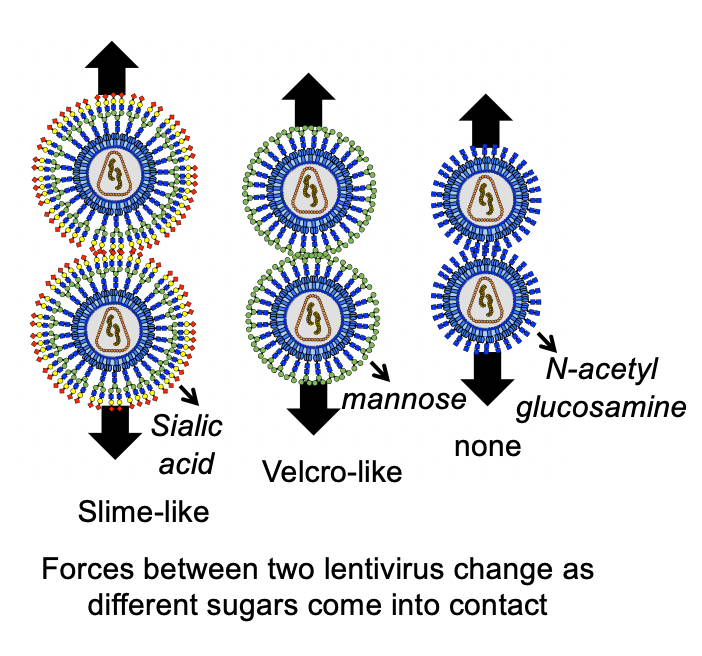
Mannose residue are a key part of N-glycans which are strings of sugars on biological surfaces, including pathogens. Components of the innate immune system are designed to intercept intruders bearing these sugars. We found that mannose sugars on surfaces have short-range Velcro-like self-adhesion that produce ‘brittle’ aggregates in solution of viruses like HIV-1, which are replete with mannose sugars. The aggregation biophysics affects the infectivity and neutralization of the virus. It also influences the trapping of the virus in mucin. We present initial studies comparing the trapping of HIV-1 in vaginal mucin from patients when testing positive and negative for Bacterial Vaginosis, a condition with high HIV-1 susceptibility.
Speaker: Preeti Chandran, Howard University
Dr. Preethi Chandran obtained her PhD from the University of Minnesota and did coast to coast postdoctoral fellowships at Columbia University and UC Berkeley, before an IRTA at the National Institutes of Health. She is Associate Professor of Chemical Engineering at Howard University, Washington DC, and the Director of Graduate Studies. While trained in the multi-scale modeling of tissue biomechanics, Preethi has gravitated towards the biophysical properties of glycans and their implications for the 'Wu Wei' (going with the flow) of biological travelers like viruses. She has much fun teaching and cherishes being voted Student Choice Professor in Chemical Engineering. She was awarded the 2024 President Award for Lifetime Achievement Volunteer Service Award for service to the community through education and mentoring.
Seminars start at 4:00 pm, and refreshments will be served at 3:45 pm. All seminars are held in the 2136 Physical Sciences Complex (#415) unless otherwise noted.