


Research Intrersts:
The Li Research Group specializes in advancing controlled synthesis techniques and programmable assembly methods for nanostructured materials. Our research is dedicated to uncovering the fundamental physical properties of these materials and leveraging nanoparticles and superstructures for cutting-edge applications in photonics, quantum engineering, and energy storage and conversion. By combining computational approaches—such as analytical modeling and coding—with materials chemistry and high- throughput methodologies, we aim to accelerate the synthesis, assembly, and discovery of innovative
nanocrystals.
- Colloidal and solid-state synthesis: Developing methods for creating magnetic, metallic, and semiconductor nanomaterials.
- Assembly of smart materials and quantum superstructures: Assembling nanostructured materials into superlattices and stimuli-responsive superstructures.
- High-throughput materials discovery: Utilizing polymer pen lithography and artificial intelligence (AI)to conduct high-throughput synthesis and screening of nanomaterials for catalysis and photovoltaics.
Objective 1. Colloidal Synthesis and Assembly of Smart Nanostructured Materials
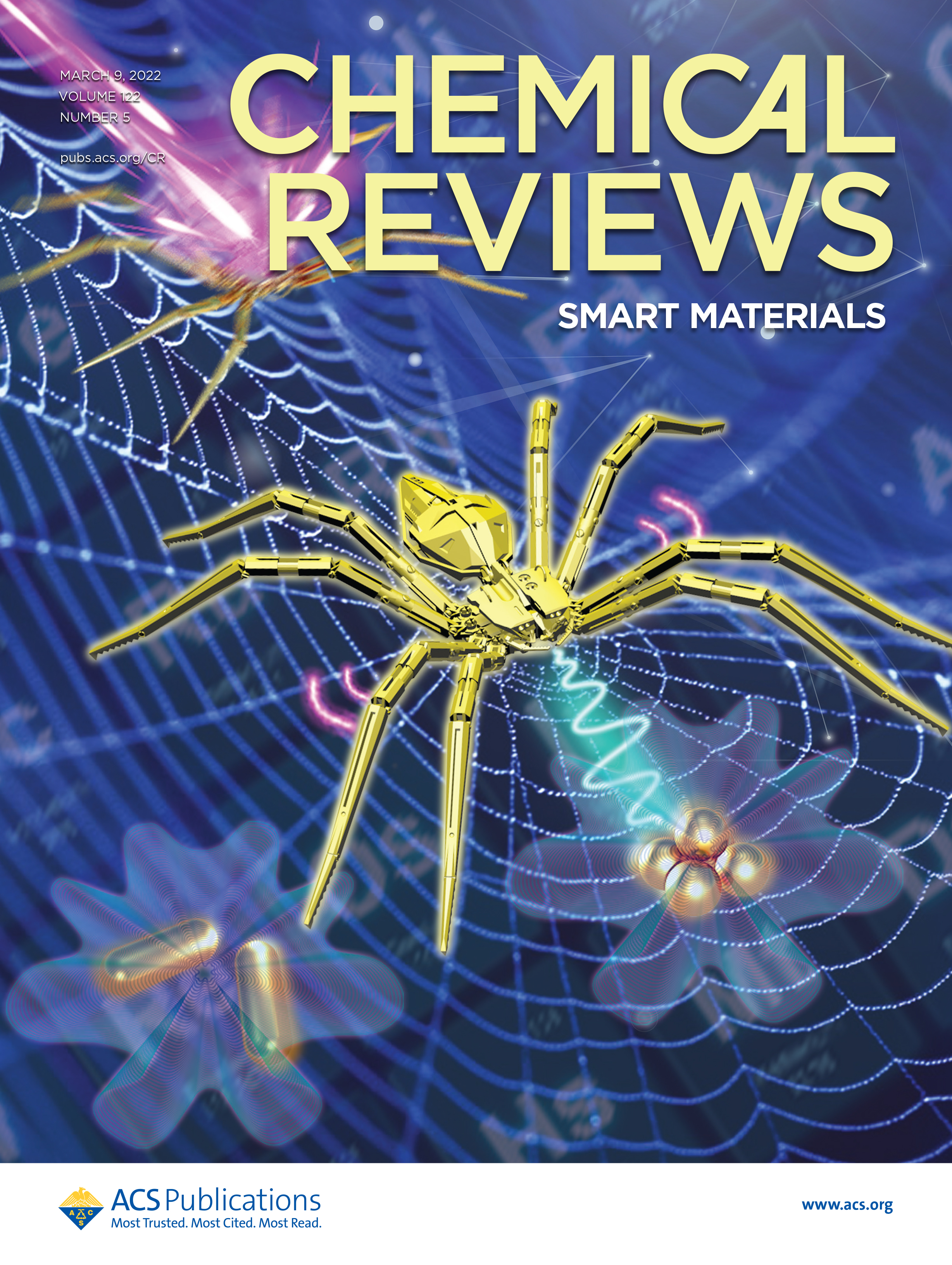
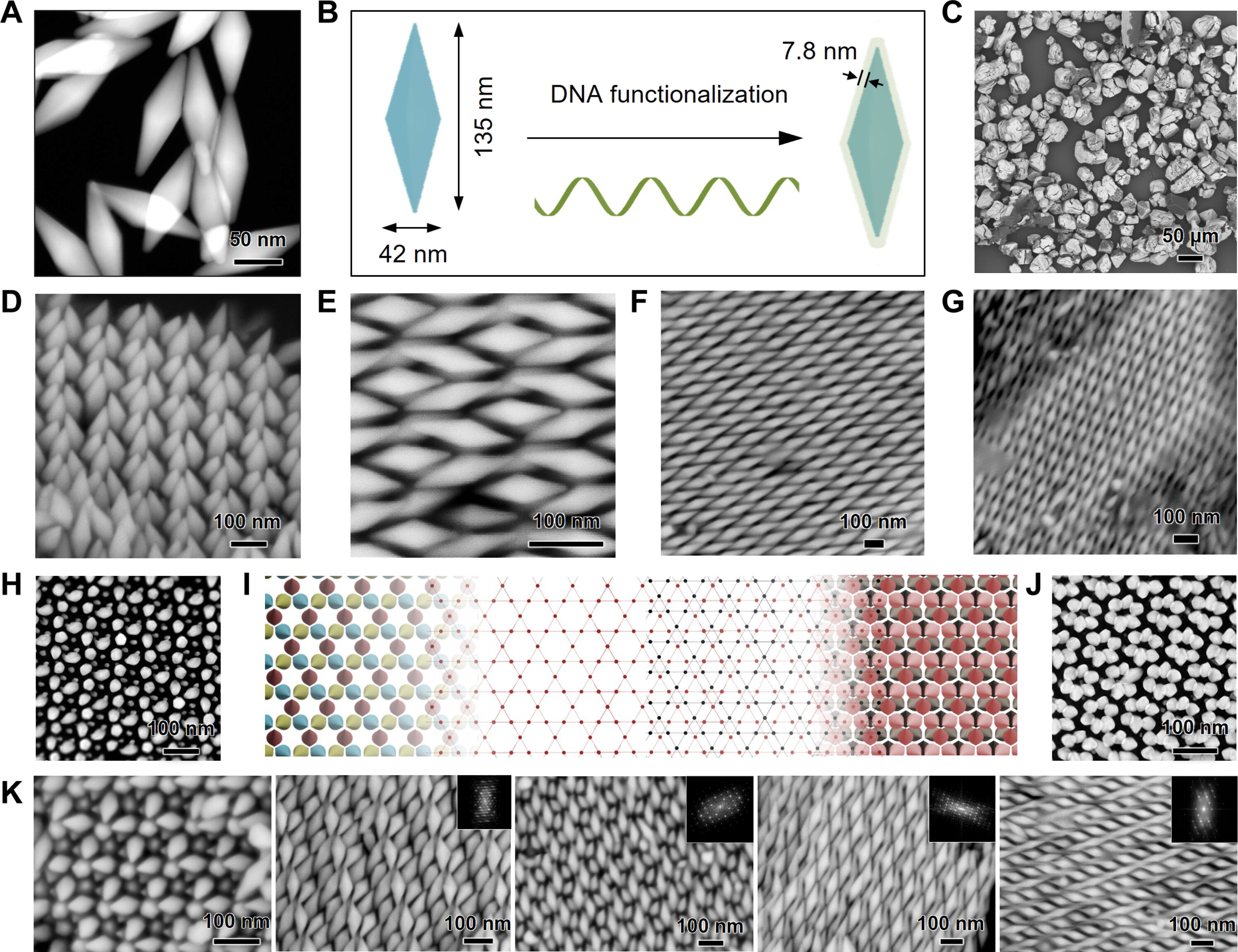
Colloidal self-assembly refers to a solution-processed assembly of nanometer-/micrometer-sized, well- dispersed particles into secondary structures, whose collective properties are controlled by not only nanoparticle property but also the superstructure symmetry, orientation, phase, and dimension. This combination of characteristics makes colloidal superstructures highly susceptible to remote stimuli or local environmental changes, representing a prominent platform for developing stimuli-responsive materials and smart devices. We develop colloidal synthesis and assembly methods for creating stimuli-responsive materials, which will be used in advanced bioimaging, biomimetic soft robots, responsive photonic crystals, and plasmonic superstructures.
Objective 2. Superstructures for Quantum and Photonic Metamaterials
We design DNA-mediated assembly of quantum or hybrid nanostructures to create reconfigurable optical and quantum metamaterials (superfluorescence, negative refraction, zero-order materials, quantum coherence and entanglement, etc.). To do so, we will harness the power of DNA to assemble semiconductor nanocrystals into metamaterials with previously or naturally undefined optical properties and quantum effects. Our research effort includes (1) inverse design of DNA-mediated assembly forresponsive negative- and zero-index metamaterials, (2) DNA-assembled quantum dots for quantum coherence, entanglement, and communication, (3) generalizing DNA programmable assembly for responsive quantum and photonic materials.
Objective 3. High-throughput Chemistry: Nanocrystal Megalibrary for Catalysis and Energy
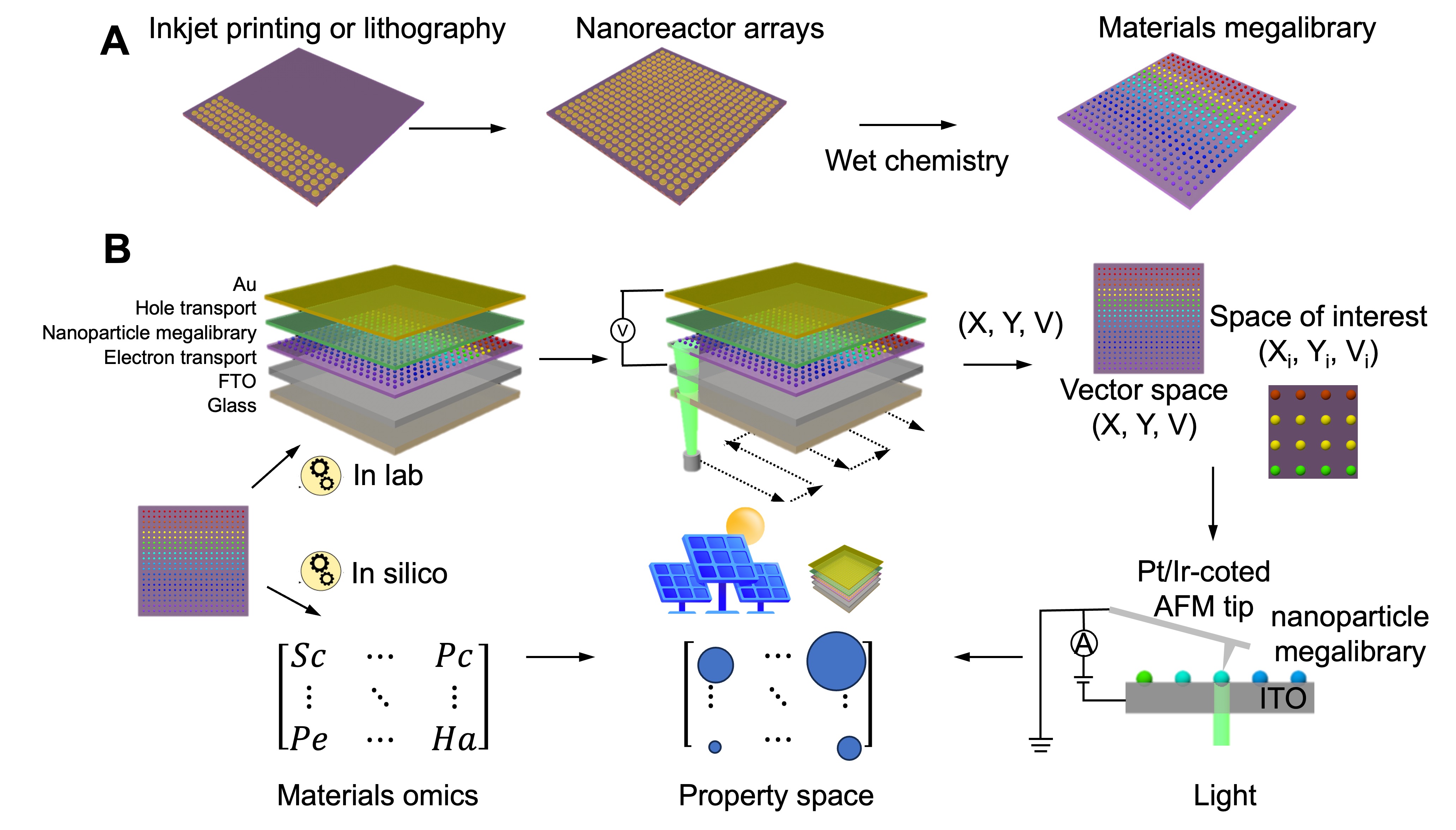
Nanocrystals can exist in distinct phases, depending on synthesis parameters and thermodynamic conditions (e.g., intermetallic compounds, high-entropy alloys, polyelemental nanocrystals, and single-atom materials). However, it is challenging to screen the physical phases and properties considering the
vast composition and phase spaces. We propose to develop combinatorial synthesis methods based on polymer pen lithography and integrate high-throughput screening, and artificial intelligence (AI)-reinforced data analysis to construct physical phase diagrams of metal and semiconductor nanocrystals. We develop AI techniques powered by data from millions of particles to accelerate discovery of new catalysts and perovskite for photovoltaics. Our lab will focus on (1) developing polymer pen lithography
for combinatorial synthesis of nanocrystals, (2) mapping physical phase diagrams for nanocrystals omics sequencing, (3) algorithm-based image processing for screening catalysts, and (4) wet-chemistry synthesis and data-driven screening of perovskites for solar cells.